


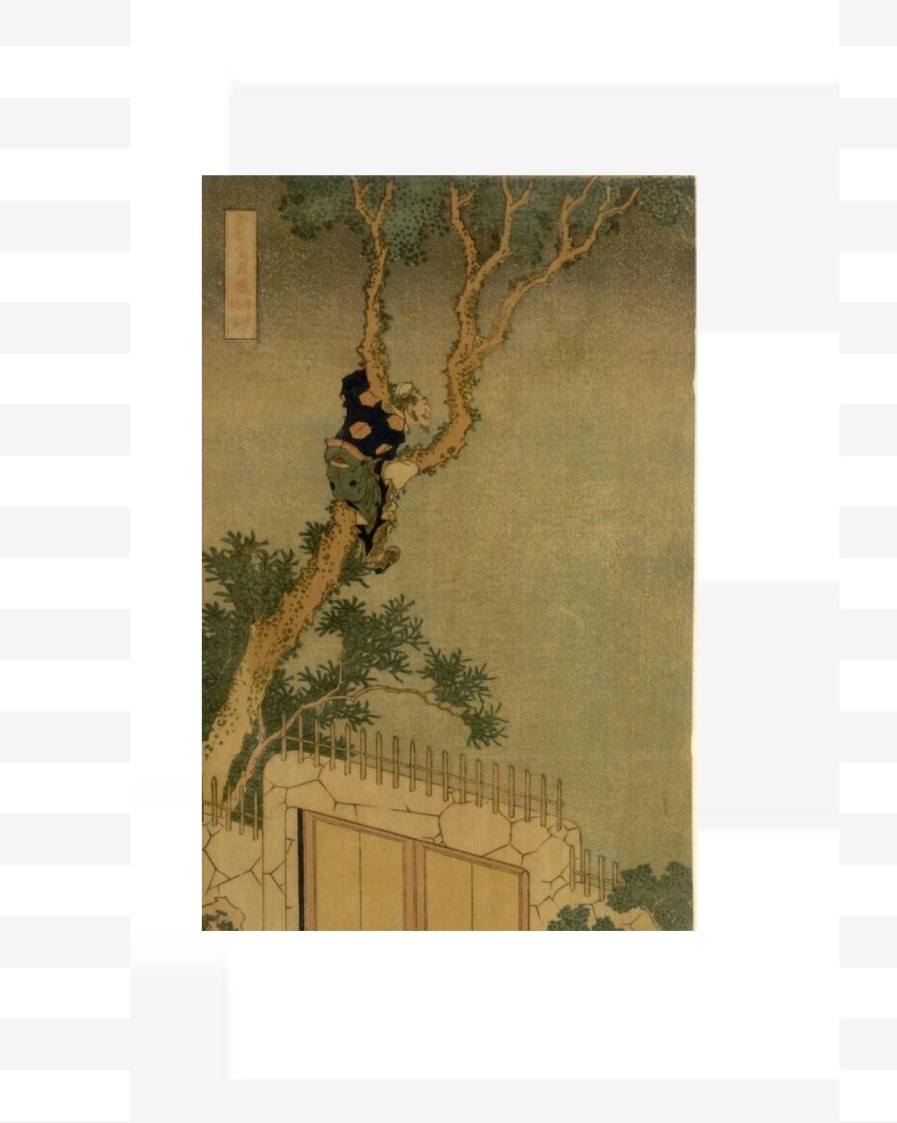
Before going into detail about who the first spies were, we will use the first question in the chapter "Questions and Answers on Ninjutsu" from the Bansenshūkai (萬川集海, 忍術問答), which discusses the first to use espionage.
Question: In what era did ninjutsu begin?
Answer: Military strategy has existed since ancient times, starting with the time of Emperor Fuxi (伏羲帝), and then reached its peak during the era of the Yellow Emperor (黄帝). It was subsequently refined and used by military leaders. Ninjutsu is fundamental to this military strategy. Although no records of ninjutsu are found from the era of Fuxi and the Yellow Emperor, its essence is often mentioned in military strategy books.
Both emperors belong to Chinese mythology and are said to have lived between 3000 and 2500 BC. Considering that Fuxi is sometimes portrayed as the creator of humanity, the claim that ninjutsu has existed since his time may imply that ninjutsu has always existed.
The conversation continues, and after several questions, the discussion returns to the starting point of Fuxi and the Yellow Emperor, then focuses on what happened immediately after them *1.
Question: It is said that the path of the ninja began with Emperor Fuxi and was most prominent during the era of the Yellow Emperor, but what happened after the Yellow Emperor?
Answer: I don't have in-depth knowledge on the subject, but from what I've heard, it seems that after the Yellow Emperor, there were few people who knew and used ninjutsu techniques. However, during the Yin Dynasty (殷, approximately 1600 BC to 1000 BC), there was a ninjutsu master named Yi Yin (伊尹). He served Shāng Tāng (商湯) and is said to have infiltrated the kingdom of the tyrant Jie (桀) of the Xia Dynasty (夏) and destroyed it. This is recorded in The Art of War. This was later passed on to a figure named Taigong Wang (太公望) of the Zhou Dynasty (周, approximately 1600 to 250 BC), who wrote a book on ninjutsu.
The text to which the conversation refers is found at the end of the chapter "The Use of Spies" (孫子兵法, 用間篇), where a brief summary introduces us to the first two documented spies from two very distant eras.
In ancient times, during the Yin period, they had I Chih in Hsia. During the Chou period, they had Lü Ya (Tai Kung) in Yin. In this way, well-informed governors and shrewd generals capable of recruiting intelligence spies will undoubtedly achieve great success. This is the military essence, upon which the Three Armies must rely to advance.
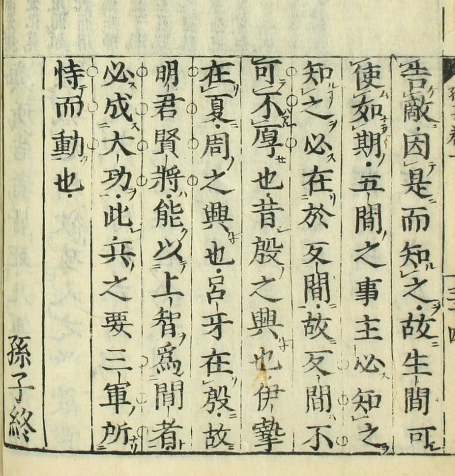
his paragraph introduces us to Yi Zhi (伊摯), also known as Yi Yin (伊尹) or Yi Yong (伊用), and Lü Ya (呂牙), referring to Tai Kung or Taigong Wang (太公望).
So, 500 years after Yi Yin acted as an undercover agent, this knowledge would reach Tai Kung, a military strategist also classified as a spy (although his spy label was more closely linked to his status as a deserter fleeing the oppressive conditions of the Shang court). Tai Kung, also known as Jang Ziya (姜子牙), captured his military knowledge in the six chapters that comprise The Six Secret Teachings (六韜). Within the many sections that comprise the six chapters, he introduced certain individuals in charge of gathering intelligence.
SECRET TEACHING OF THE DRAGON
The Wings of the King
"Ears and Eyes (耳目), seven people: responsible for overseeing everything around, listening to what people say; seeing the changes; and observing the officers in the four directions and the true situation of the army.
"Wandering Officers (遊士), eight people: responsible for spying on the enemy's debauchery and observing its changes; manipulating their emotions and observing the enemy's thoughts to act as spies (間諜).
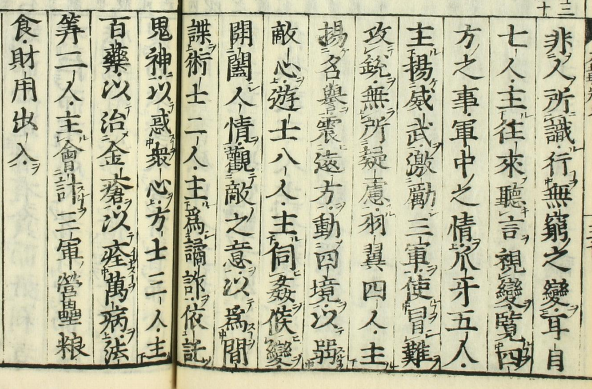
Excerpt from The Six Secret Teachings (六韜) which explains the missions of certain spies.
Although words like the aforementioned "spy" (間諜) are used, whose separate characters are equally related to spy (間) and spy (諜), and other characters meaning spy such as 閒, or spy 瞯, 覘, the text uses the wandering person 遊士 and gives it the meaning of spy. This would be widely repeated in Japan, especially during the Sengoku period (戦国時代). Names like "grass" (草, kusa), "leaf monkey" (軒猿, nokizaru), "shortcut person" (早道之者, hayamichi no mono), etc. would serve to describe shinobi intelligence agents or those whose activities were related to shinobi (忍).
600 years after the publication of The Six Secret Teachings, we saw an evolution and "professionalization" of the spy. The chapter "The Use of Spies" in The Art of War presents five types of spies based on their specialty.
Local Spy (郷間) – uses agents from the local district.
Internal Spy (内間) – uses people holding government positions.
Double Agents (反間) – uses the enemy's spies.
Replaceable Spies (死間) – are used to spread information outside the state. Provide (false information) to our (replaceable) spies and infiltrate them among enemy agents.
Live Spies (生間) – return with the information.
Thus, of all matters related to the Three Armies, there is no closer relationship than with spies; there is no reward more generous than that given to spies; there are no matters more secret than those pertaining to spies.
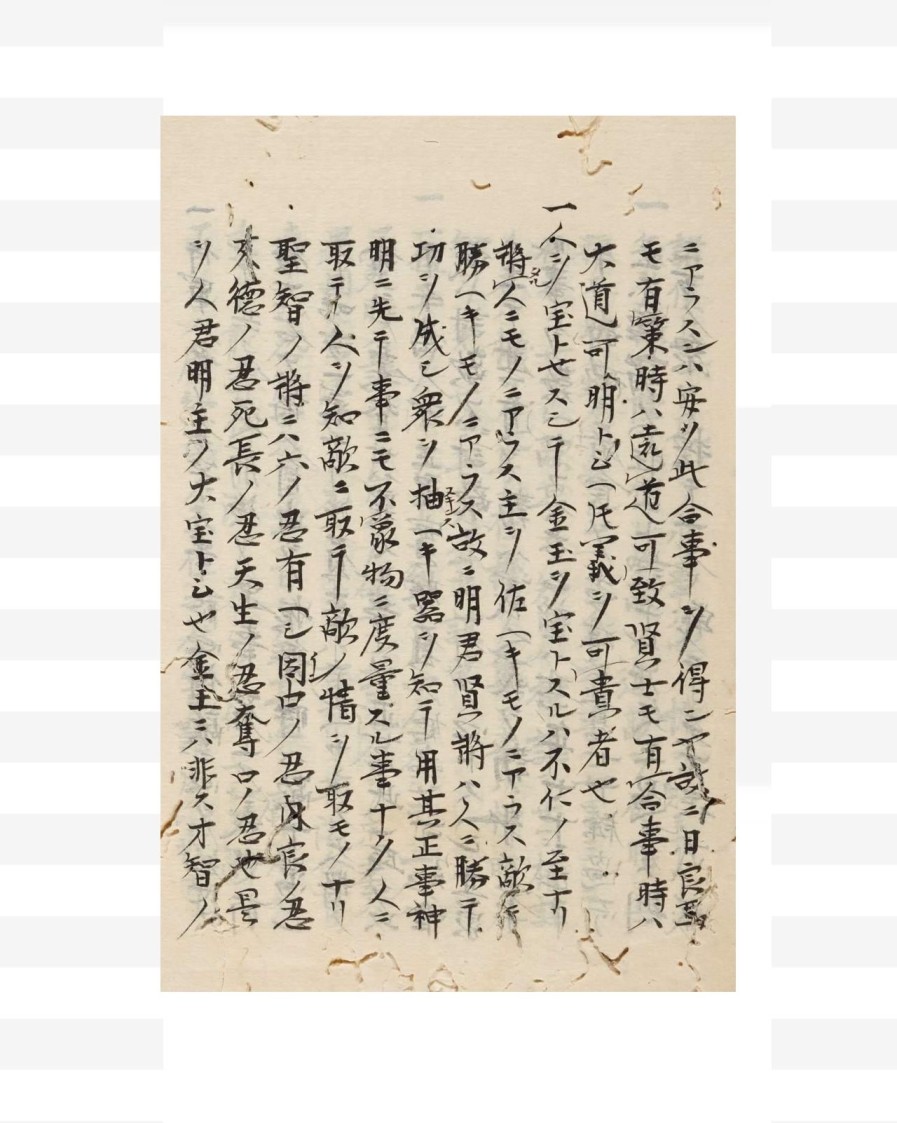
An interesting section of the document Kusunoki Hyôgo Ki (楠兵庫記), influenced by Sun Tzu's five spies, where the six shinobi agents of a wise commander appear. 因口之忍、内良之忍、返徳之忍、死長之忍、天生之忍、奪口之忍
Within the collection of The Seven Military Classics (武經七書), The Six Secret Teachings and The Art of War remain two of the most influential military documents in the field of ninjutsu, with the Art of War perhaps standing out above all others. This is evident in the number of times it is mentioned in the Bansenshūkai and other similar documents of the time. Subsequent to these two documents, and possibly influenced by them (in this case, perhaps its greatest inspiration comes from the Six Secret Teachings), would appear the only volume of Secret Techniques in Military Strategy (兵法秘術一巻書), written by Zhang Liang (張良).
April 14th, 2025, Ensanryū 鳶山龍
*1 - These same statements are included in the chapter "Biography of Iga and Kōga", Shinobi Hiden (忍秘伝、伊賀甲賀伝記) but are better explained in the Bansenshūkai