


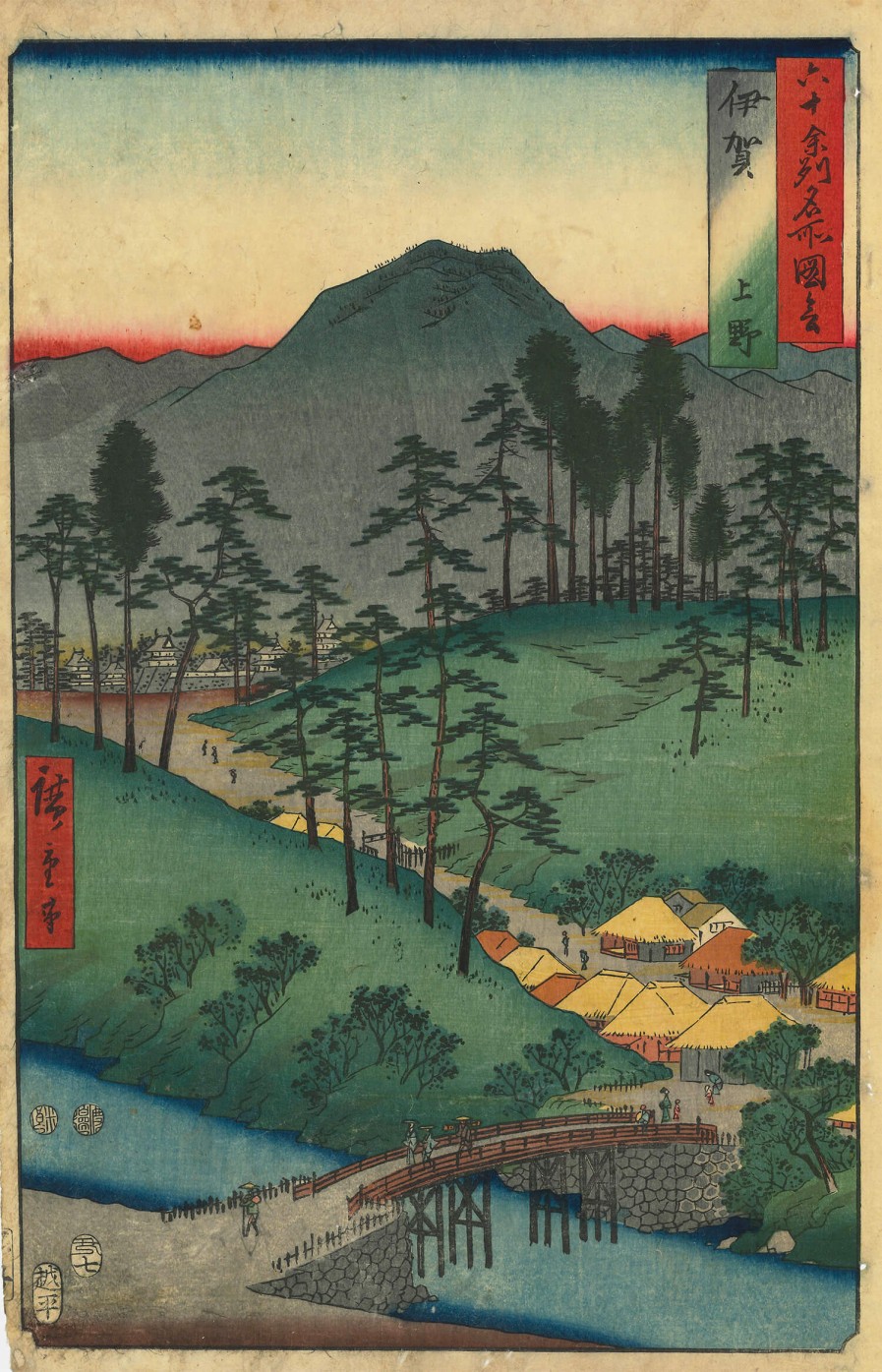
If we try to find a single origin of Ninjutsu, we soon realize that each document, regardless of age, has its own theory. If we take two of the most famous documents on Ninjutsu as an example, the first lines of the chapter “Questions and Answers” (忍術問答) of the Bansenshūkai (万川集海) tell us that its origins date back to the mythological figures Fuxi (伏羲) and The Yellow Emperor (黄帝). While the Shinobi Hiden (忍秘伝), in its first chapter “Biography of Iga and Kōga” (伊賀甲賀伝記) says its origins are traced back to Liu Bang (劉邦)*1.
Another document that takes us on a journey to China's guide to finding the roots of ninjutsu is the "Chronicle of the Iga Riots" (伊乱記), also known as "The Iga Riots (at the time of) Tenshō" (天正伊賀の乱) written by Kikuoka Nyogen (菊岡如幻) in 1679. It states that the origin of ninjutsu is Oiru Tayuya (御色多由也).
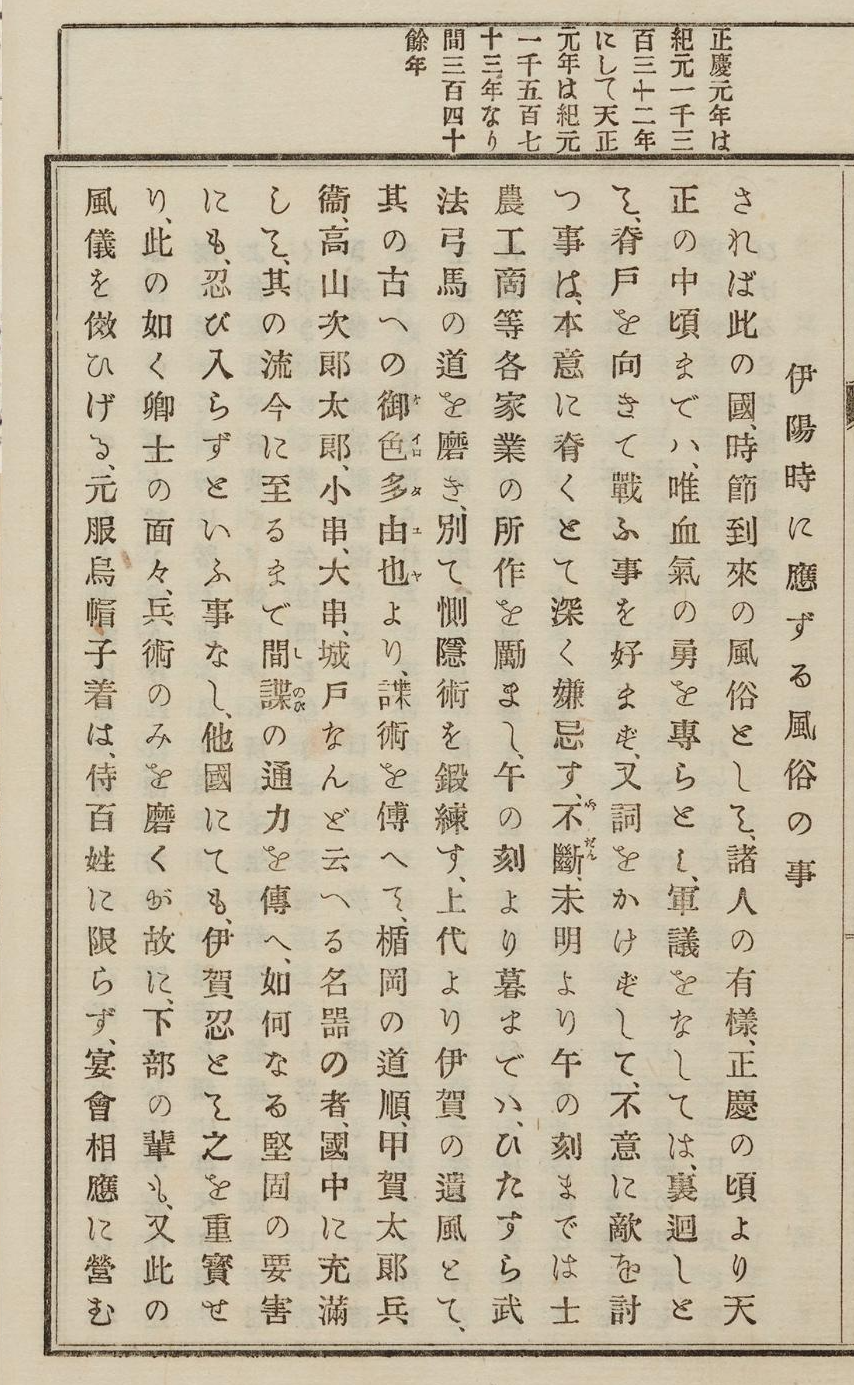
Page from Iranki (伊乱記) where the theory of the origins of ninjutsu is set forth.
...“From dawn until noon, they devoted themselves body and soul to Shinōkōshō (士農工商)*2. Then, from noon until dusk, they devoted themselves entirely to perfecting their fighting, archery, and horsemanship, in addition to training in concealment techniques (側隠術).
It was believed that, since ancient times, the Iga legacy had been preserved, passing on the knowledge of espionage (chōjutsu 諜術) from the time of Oiru Tayuya (御色多由也) to the present. In that region, Tatenoka no Dōjun (楯岡の道順), Kōga Tarōbei (甲賀太郎兵衛)*3, Takayama Jirōtarō (高山次郎太郎), Kogushi (小串), Ōgushi (大串) and Kido (城戸). Over the generations, the region had been filled with individuals with these skills, and to this day, the practice of intelligence agents, known as "shinobi" (間諜「しのび」), continued to be passed down...
Despite having a Japanese name, Oiru Tayuya's origins must be traced back to China, specifically to the story of Xu Fu, a Chinese alchemist of the Qin Dynasty. Emperor Qin, in his quest to achieve immortality, sent Xu Fu along with an expedition of thousands of people (including medicine collectors) in search of the elixir of eternal life. It is said that he eventually landed in Japan in the Kumano area and later arrived in Iga, Japan, where he passed on (among others) the knowledge of ninjutsu.
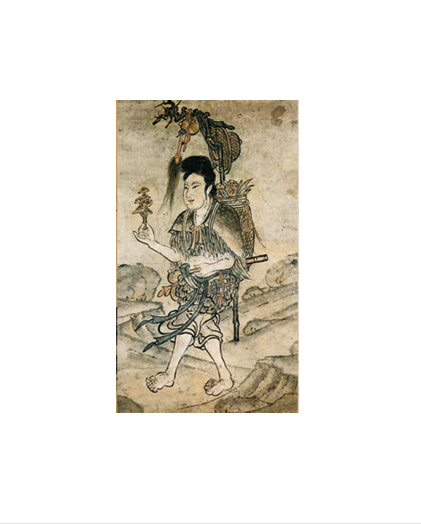
It is said that, in the 72nd year of Emperor Kōrei (孝霊天皇), 229 BC, a subject of the first emperor of China, Qin Shi Huang (始皇帝) traveled to Japan, then known as "Yakkyoku" (薬局, literally "pharmacy"), in search of an elixir of immortality, and there he introduced ninjutsu.
Xu Fu (徐福, Jo Fuku in Japanese), accompanied by five hundred beautiful young men and women under the age of fifteen, landed on the coast near Shingū (新宮) in the Kumano region (熊野). Xu Fu traveled through the mountains of the Kishū region (紀州) searching for the elixir of immortality, but when he failed to find it, he gave up on returning to China and decided to settle there. While living in the nearby forests, Xu Fu taught the Japanese various techniques, such as whaling, papermaking, creating bone-cutting blades, and even the method of making tobacco. He also passed on knowledge of ninjutsu.Xu Fu's Expedition to Find the Medicine of Eternal Life. Utagawa Kuniyosi (歌川国芳)
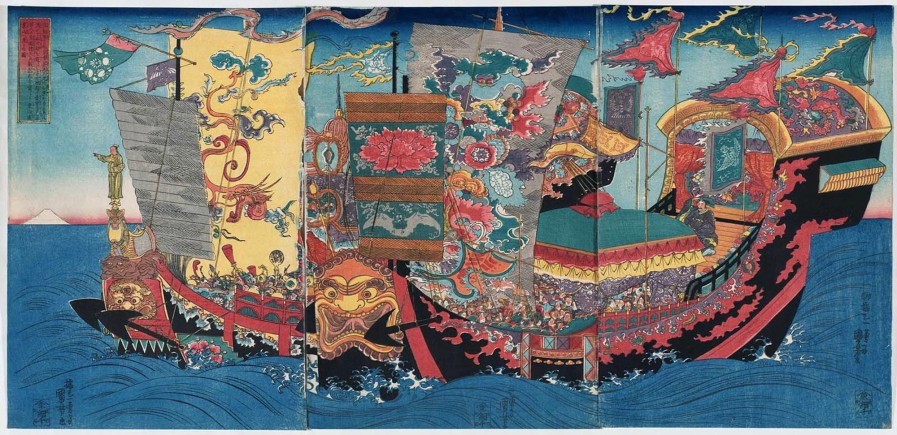
Xu Fu's Expedition to Find the Medicine of Eternal Life. Utagawa Kuniyosi (歌川国芳)
According to one version, Xu Fu had no intention of settling permanently in Japan and, after his stay, returned to China, leaving two wives behind. These women, Oiru Tayuya and Oyumichi Dayū (大弓路太夫), moved from Kishû to Iga (伊賀) and passed on ninjutsu to the inhabitants of Iga. However, it is also said that Oiru Tayuya was the name Xu Fu adopted upon becoming a naturalized Japanese citizen.
Koyama Ryūtarō (小山龍太郎) in a talk with Masaaki Hatsumi (良昭初見) published in the monthly martial arts magazine Hidden (月刊秘伝), comments that Takamatsu Toshitsugu (高松寿嗣) did not believe that Xu Fu was the first naturalized Japanese who brought the knowledge that would give rise to Japanese ninjutsu, but that it was Ibō (異匄, or Ikai) who appears in the line of transmission of Togakure Ryū (戸隠流). Also the historian Okuse Heishichirô (奥瀬平七郎) in his book “Ninjutsu: Its History and the Ninja” (忍術: その歴史と忍者), proposes that Oiru Tayuya was actually later referred to as Tagoya (多胡弥), a spy under the orders of Emperor Tenmu (天武天皇, year ? - 686). According to the Bansenshûkai and some other manuscripts of the style and period, this Tagoya is the origin of Ninjutsu in Japan.
November 25th, 2024, Ensanryū 鳶山龍
*1 - One of Liu Bang's followers was Zhang Liang (張良) who would become one of his main strategists.
*2 - 士農工商, the four occupations: 士: warrior, 農: farmer, 工: artisan and 商: merchant.
*3 - We find a Kōga Tarobei Ozuno (甲賀太郎兵衛小角) in the lineage of the Shinden Fudō Ryū Daken taijutsu style (神伝不動流行拳体術)